Affiliate report — we earn a commission on Takealot links. Your price does not change. How this is paid for

KAROO ALOEReport 01 · South Africa

Report 01 Aloe barbadensis Takealot ZA 27.10.2026

Africa's driest plant, chilled to four degrees.

Aloe gets through a dry season by hoarding water — close to a litre of jelly sealed inside a single leaf. Filleted, filtered and sunk into a R129 jar of gel patches, that water buys you about twenty cold minutes under each eye. This report is about how far twenty minutes goes, and where the box starts overselling.

Affiliate link · price checked 27.10.2026 · the listing is the final word

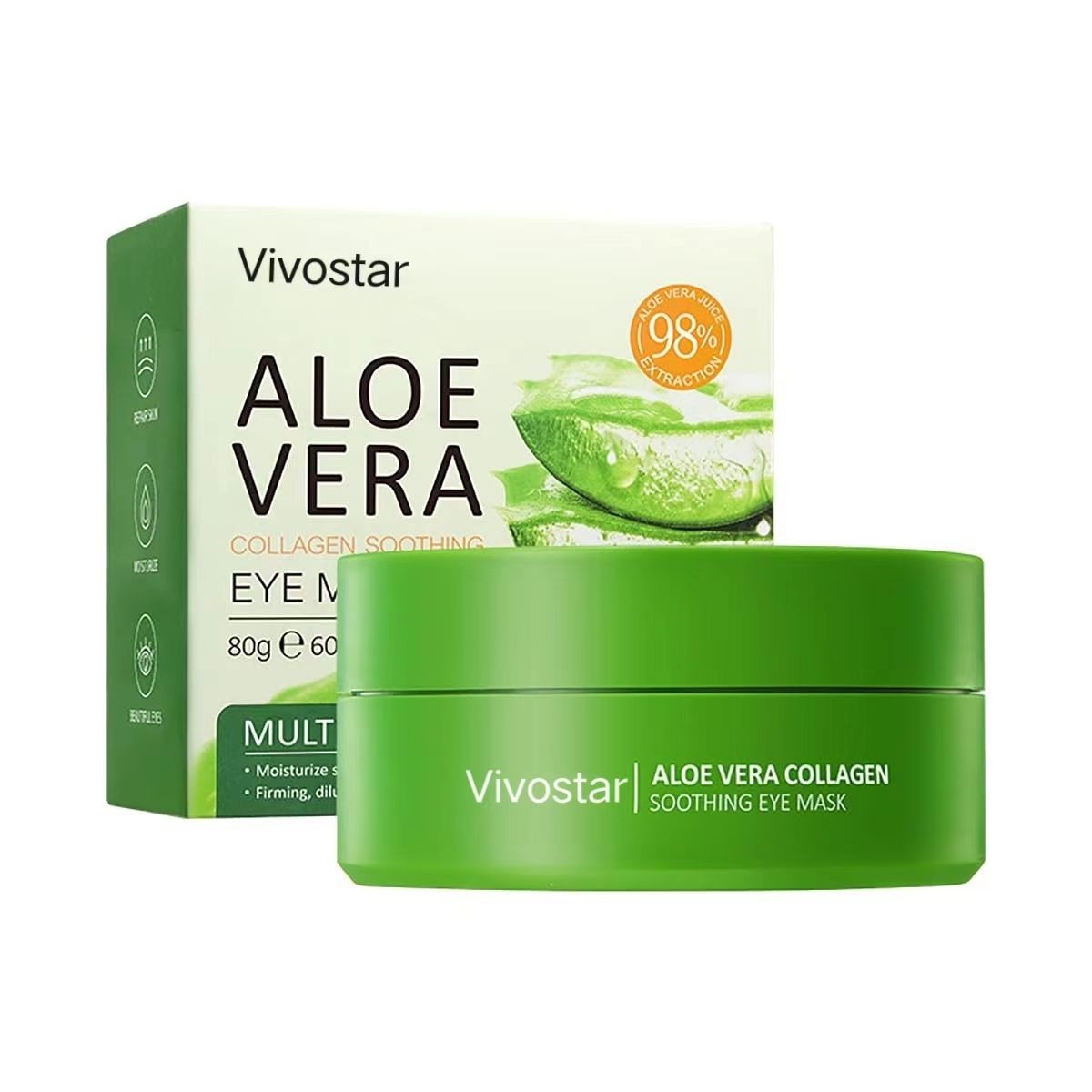
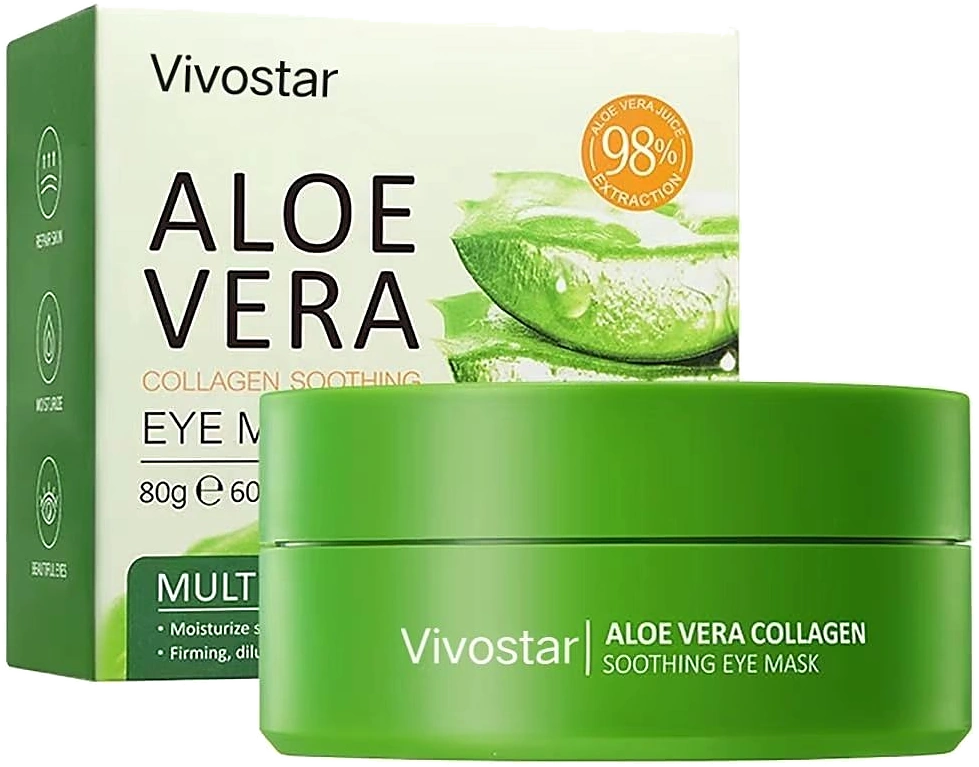
The Vivostar Aloe Vera Collagen Soothing Eye Mask jar beside its printed box.
R129Takealot, today
30Pairs in the jar
R4.30Per morning
20minPer pair, no longer

01 / GenusWhere aloe is from

Almost every aloe on earth
is an African plant.

The genus runs to roughly five hundred species, and all but a handful of them are native to this continent, to Madagascar, or to the Arabian Peninsula across the water. Nothing else on the planet evolved them. Three of them explain what is in your jar.

OursAloe ferox

The bitter aloe: a single-stemmed plant with a scarlet candelabra of flowers that still gets tapped by hand on Karoo and Eastern Cape hillsides. Its sap is dried for one trade, its fillet processed for another.

Endemic to Southern South Africa

In the jarAloe barbadensis

Aloe vera, the species the cosmetics industry standardised on. Its wild origin is still argued over — most botanists put it on the Arabian Peninsula — and it is now farmed in plantations from Mexico to Hainan. This is the one soaked into your patches.

Farmed Everywhere warm

The cousinAloe dichotoma

The quiver tree of the Northern Cape and southern Namibia — the same genus pushed as far as it will go, into a tree that stores its water in a trunk instead of a rosette. Nothing here ends up in skincare. It is just the clearest picture of what these plants are for.

Endemic to Northern Cape · Namibia

±500species

Madagascar alone carries well over a hundred species found nowhere else. The gel in a cosmetic jar is not an exotic extract — it is the ordinary survival equipment of a family of plants that happens to be ours, repackaged and sold back to us at R4.30 a morning.

02 / LeafWhat is inside it

Three bands. Only one of them
belongs on your face.

Cut a leaf across and it comes apart in layers, each doing a different job for the plant. This is why the words aloe vera on a label mean less than they look like: everything depends on which band made it into the jar.

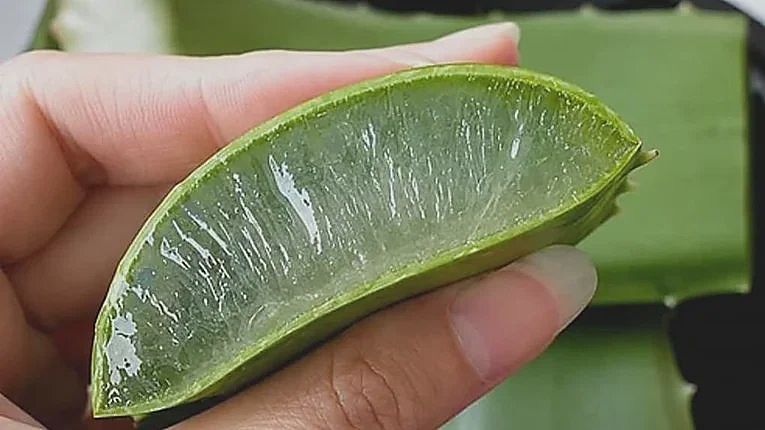
A cut aloe leaf held open, showing the clear inner fillet.
Fig. 1 — the fillet, scraped clear of the rind
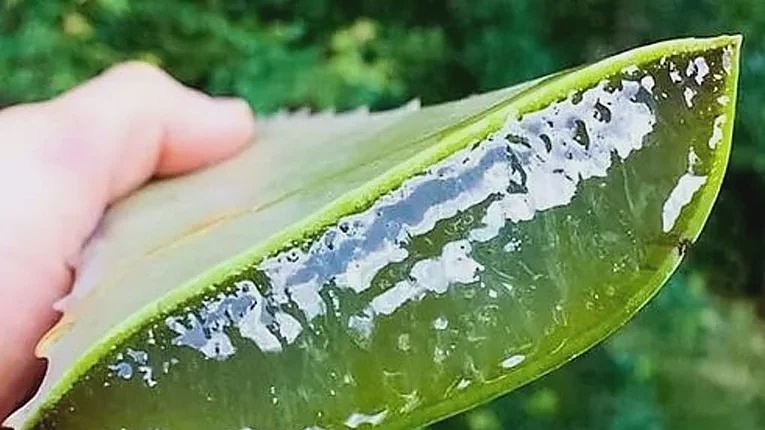
An aloe leaf split lengthways with gel on the cut face.
Fig. 2 — gel on the cut face
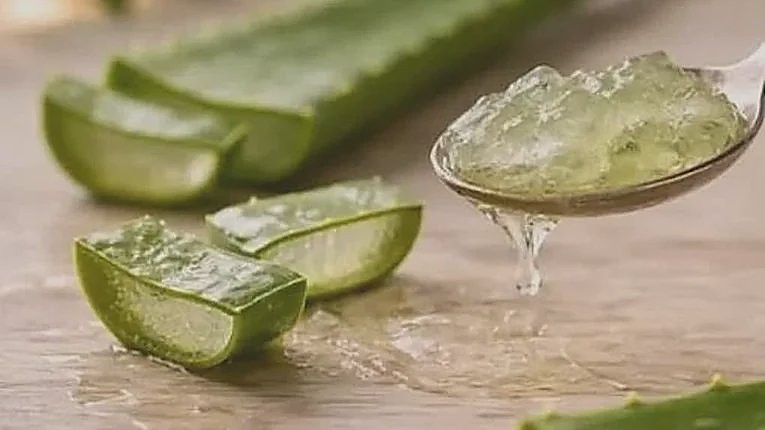
Cut sections of aloe leaf beside a spoonful of the clear gel.
Fig. 3 — the gel, spooned out
Layer 03 · the only cosmetic part

The inner fillet

The clear jelly at the centre of the leaf, and the only part that ends up in an eye patch. Almost entirely water, held in a polysaccharide mesh — which is exactly why it behaves as a humectant when it is sitting on skin.

Water content of the fillet≈ 99%

The remaining one percent is the interesting part: polysaccharides, a little protein, traces of minerals. It is also the part a manufacturer can dilute, preserve and perfume without changing what the label says.

  1. i  The leaf is opened and the fillet scraped clear of the rind.
  2. ii  What is left is filtered, preserved and standardised into a juice.
  3. iii  That juice is soaked into a hydrogel patch cut to the orbital bone.

Photographs above are of raw aloe vera, shown to explain the ingredient. They are not photographs of this product.

03 / ColdThe step everyone skips

Most of what you are buying
is a temperature.

Chilled gel briefly tightens the fine vessels under the thinnest skin on the body, and that is where the visible drop in morning puffiness comes from. It is physics, not chemistry — which means the jar can only do it if you put the jar in the right place. Drag the handle.

4°C
patch temperature

Fridge door — correct

Cold enough to constrict, soft enough to mould to the orbital bone. Two hours in the door does it; overnight is better.

Why not the freezer

Frozen gel stiffens. A stiff patch sits off the curve of the bone instead of following it, so less of the surface is in contact and it does less, not more.

Why not room temperature

A warm patch still hydrates. It simply skips the part people actually notice in the mirror — the brief tightening and the drop in swelling.

How long the cold lasts

A few hours at best. This is a look-better-by-nine-o'clock product, not a treatment, and nothing on the box changes that.

04 / MethodFour steps, twenty minutes

Do these four things
and the jar is working.

There is no technique to learn here. The whole job is getting out of the gel's way, and not leaving it on long enough to undo itself.

Chill

Fridge door · never the freezer

Two hours in the door is enough, overnight is better. Cold is where the tightening sensation and most of the visible change come from.

Not the freezer. Stiffened gel will not follow the orbital bone.

Clean

Bare skin, patted dry

Cleanse, dry, and put nothing underneath — no serum, no eye cream, no oil. A patch works by direct contact, and anything in between is a film it has to get through.

Reactive skin? Patch-test a corner on the inner forearm a day ahead.

Place

Along the bone, not the lid

Wider curve downward, roughly three millimetres below the lash line, following the orbital bone. Press it on where it falls rather than stretching it to cover more.

Never on the eyelid, and never close enough for essence to run into the eye.

Peel

Fifteen to twenty minutes

Take them off while they are still damp, pat the leftover essence in rather than rinsing, then carry on with your actives. Each patch is single use.

Dry gel starts pulling moisture back off the skin. There is no prize for leaving them on.
Twenty minutes is the ceiling, not the target.

Fifteen is plenty on most mornings. Past about twenty the hydrogel has given up what it has, and an evaporating patch becomes a wick working in the wrong direction — the one mistake that turns a good patch into a pointless one.

05 / JarWhat arrives

An 80 gram tub,
sixty patches, one spatula.

Thirty pairs swimming in essence, with a small plastic spatula clipped under the lid so you are not fishing them out with your fingers. Soft, translucent, and cold if you have kept it where it belongs.

ProductAloe Vera Collagen Soothing Eye Mask
BrandVivostar
Pack80 g · 60 patches · 30 pairs
Named activesAloe vera juice, collagen
FormatHydrogel patch, single use
Skin typeAll · unisex
ClassificationCosmetic — non-medical
Sold byQueen Esther's Beauty, on Takealot
ReturnsListed non-returnable by the seller
Price checkedR129 · 27 October 2026
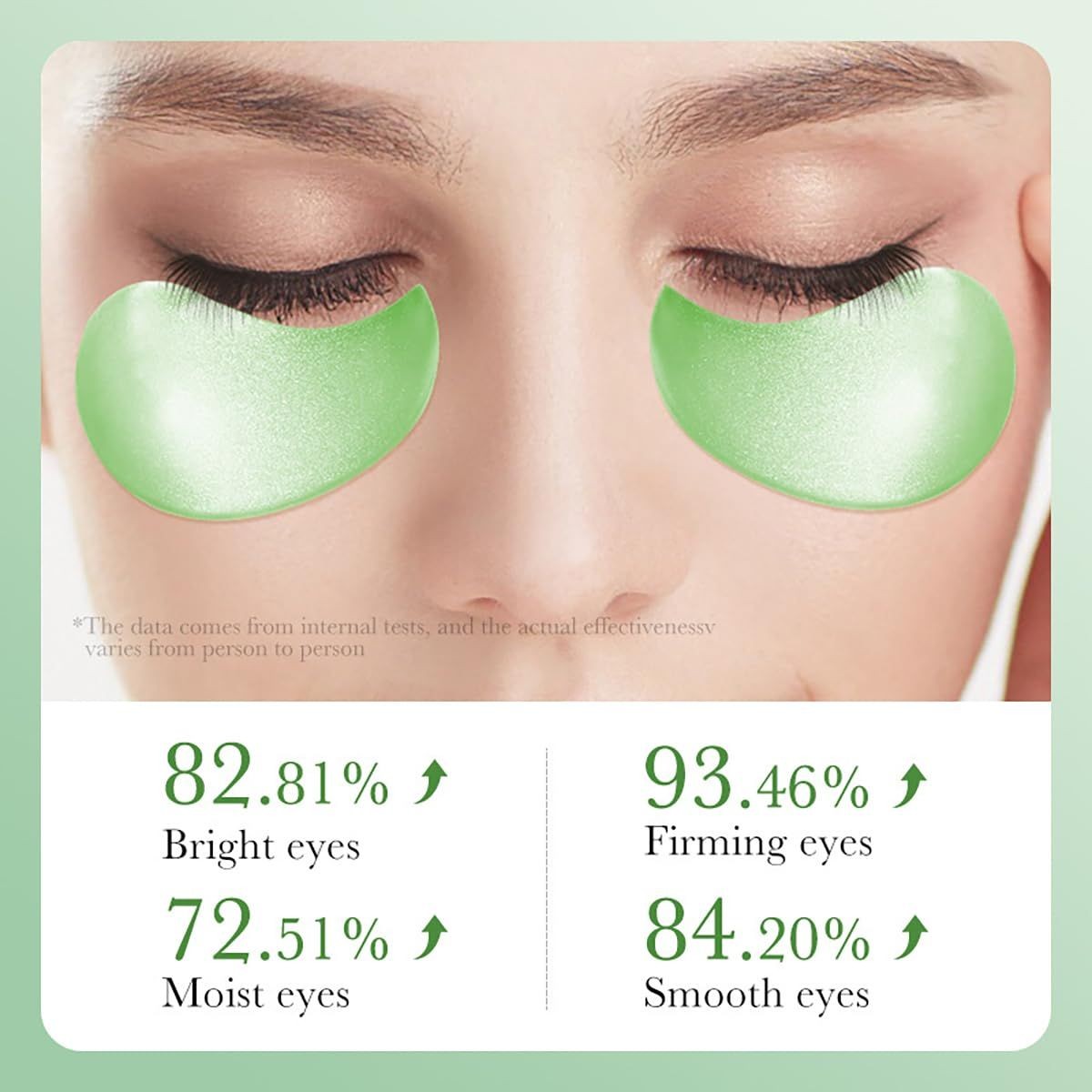
On that 98% badge

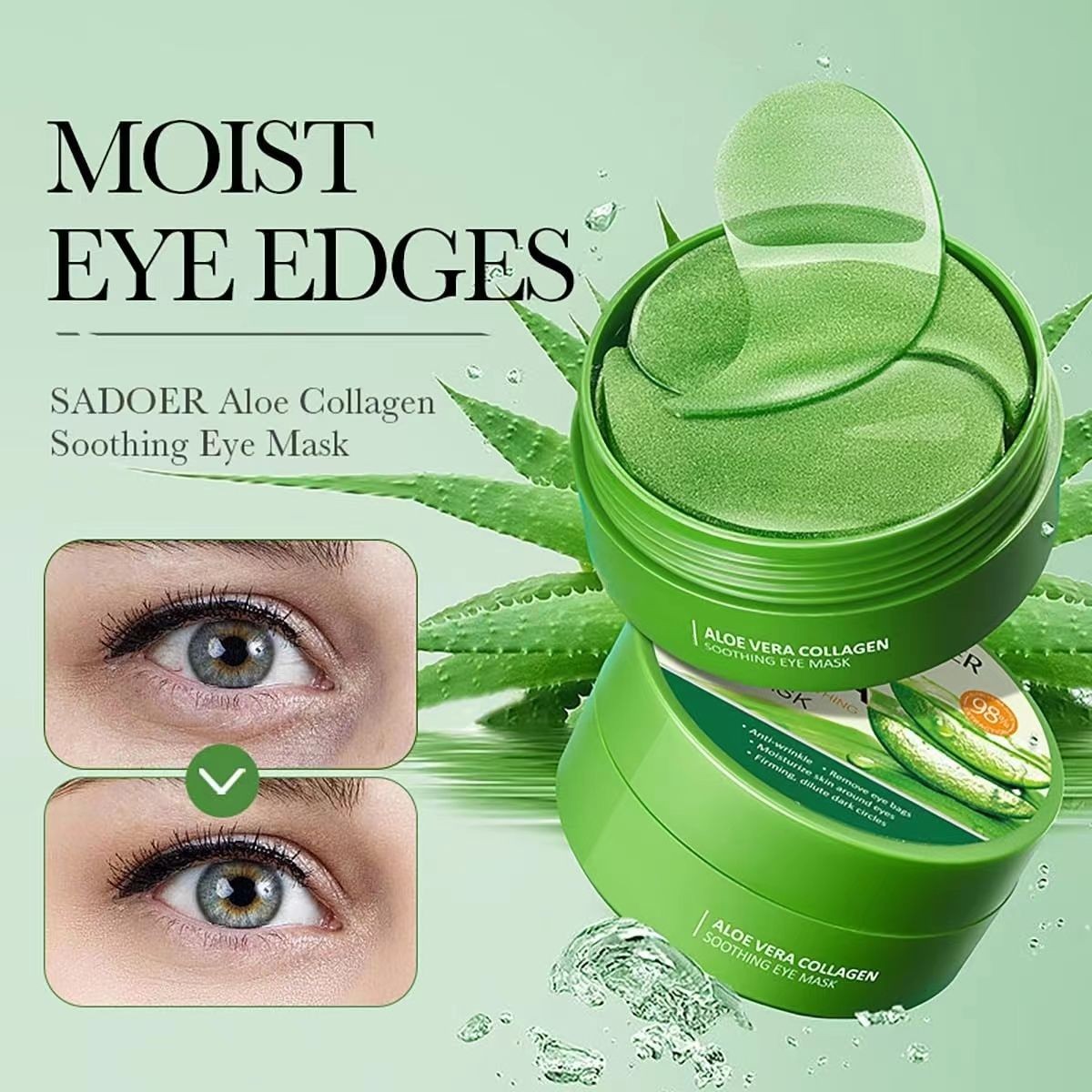
The box carries a roundel reading 98% aloe vera juice extraction, and the listing artwork prints a row of percentages for brighter, firmer, moister and smoother eyes. Every one of those figures is the manufacturer's own internal testing. No independent laboratory has published them, the listing does not itemise the full ingredient deck, and we have not verified any of it. Read them as marketing, and read the actual jar when it arrives.

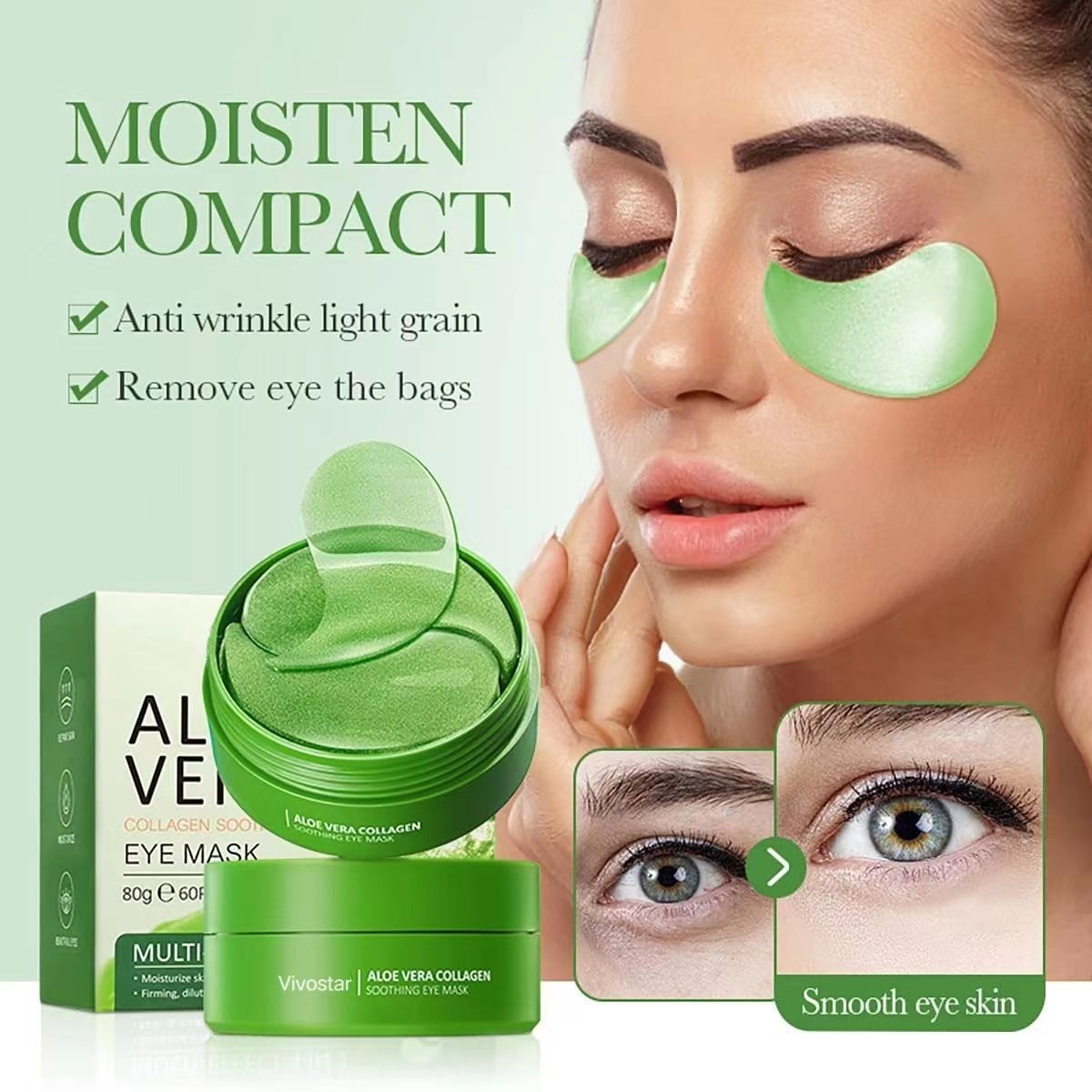
The open jar of green hydrogel patches with an aloe leaf behind it.
Seller listing artwork — the jar open
The Vivostar box and closed jar, 80 g.
Box and jar as supplied
A model wearing the green gel patches under both eyes.
Patches in place, along the bone
Listing artwork printing the manufacturer's own percentage claims for brighter, firming, moist and smooth eyes.
The percentages above are the manufacturer's internal figures — reproduced only to show what is being claimed

06 / SumsWhat it really costs

A jar is thirty pairs
and not one more.

Per-morning cost is the number that sells this product. The annual one is the number nobody works out. Set how often you would actually reach for a pair, and what you paid, and both appear below.

Pairs a week3

Two or three mornings a week — what most people settle into.

Price you paidR129

Takealot's listed price on 27 October 2026 was R129 for the 80 g jar, marked down from R199 by the seller. Delivery is charged separately unless you qualify for free shipping, and is not counted here.

KAROO ALOE · one jar, worked out

Pairs in a jar30
Cost per pairR4.30
One jar lasts10 weeks
Per monthR55.90
Jars per year5.2
Spend over a year

R671

Prices change without notice. The Takealot listing is the only figure that counts at the moment you order.

07 / VerdictBoth columns

Worth it — with four things
held against it.

Everything above is why we would buy it. The right-hand column decides whether you should, and every line in it is a problem before you order rather than after.

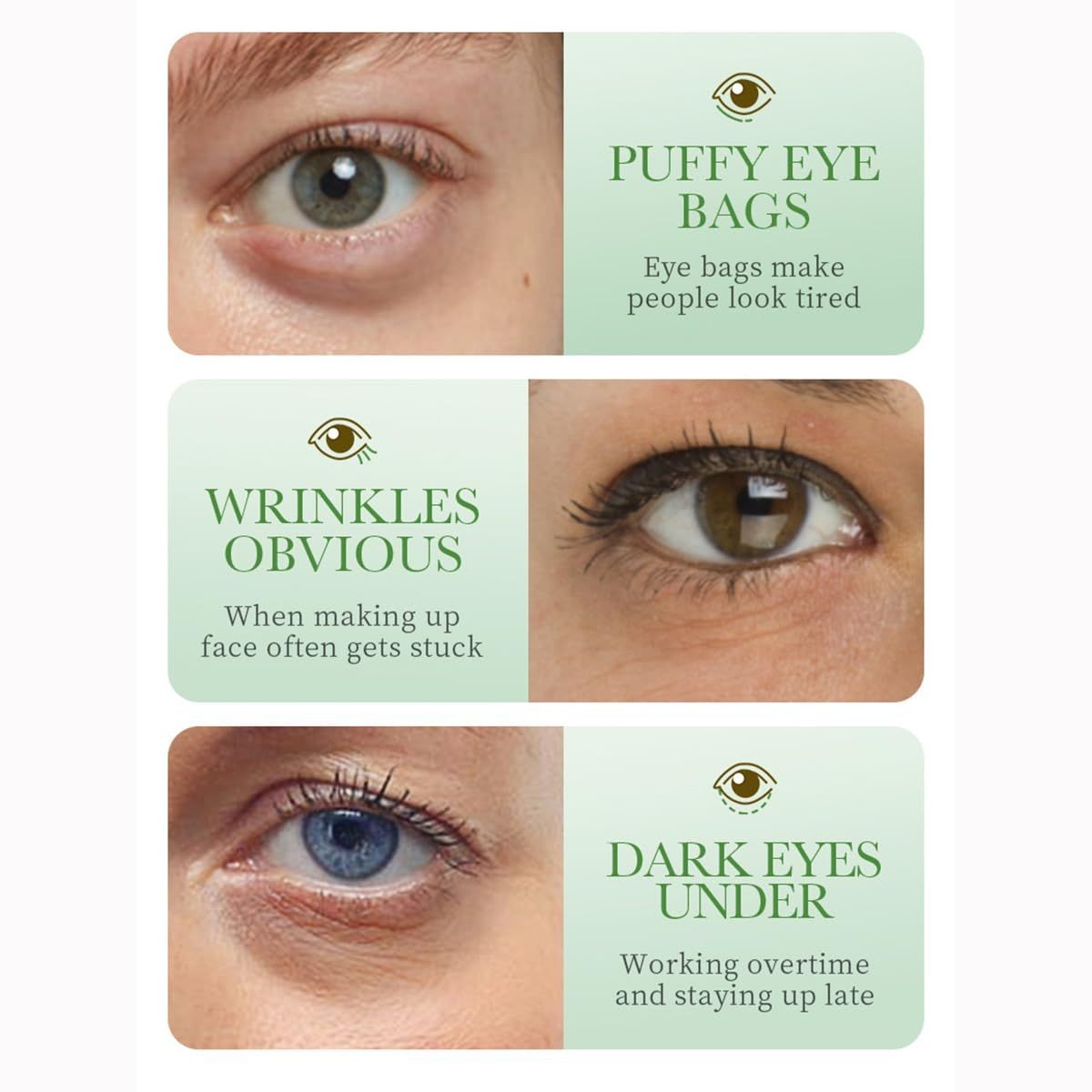
Listing artwork naming puffy eye bags, visible wrinkles and dark circles as the problems the product addresses.
Seller artwork — the three problems named on the listing

Three problems are named on the box.
Only one of them is really in range.

Puffiness responds to cold, and it does so reliably for a few hours. Fine lines that are dehydration lines look shallower while the area is holding water. The third — a dark circle made of pigment or of the shadow cast by the bone — is not something any topical gel reaches, whatever the artwork says. The two columns below are written with that split in mind.

In its favour

The hydration is real

Aloe is a humectant and a hydrogel patch is an efficient way to hold one against skin. Twenty minutes leaves the area softer, and lines that are really dehydration lines read shallower while it lasts.

Cold does what cold does

Chilled gel briefly narrows the fine vessels under thin skin and morning puffiness visibly drops for a few hours. Reliable, repeatable, and nothing to do with the ingredient list.

R4.30 is a fair ask

At thirty pairs a jar it undercuts almost every sachet-sold eye patch on the same shelf, and it is cheap enough to use before an event without thinking about it.

It is pleasant to use

Thick enough to handle, they stay where you put them, there is a spatula in the lid, and the essence absorbs without a sticky film. Unremarkable things that quietly decide whether a jar gets finished.

Held against it

It is a cosmetic, not a medicine

The listing marks it non-medical. It is not registered with SAHPRA as a medicine or a medical device and it treats no eye condition. Persistent swelling, itching or any noticeable change in vision should be checked by a GP or an optometrist.

Dark circles are mostly out of reach

Shadowing from pigment, or from the shape of the bone and the hollow beneath it, does not respond to a topical gel. A few hours of brighter, less swollen skin is the honest ceiling.

The seller lists it non-returnable

Takealot's own policy still covers a parcel that arrives damaged or not as described, but a change of mind is not covered on this one. Read the returns panel on the listing before ordering.

The claims are unverified

The 98% badge and the percentage improvements are the manufacturer's own figures, and the full ingredient list is not published on the listing. If you react to particular preservatives or fragrance, you are reading the jar after it arrives.

08 / QuestionsAnswered flatly

The seven we would ask
before paying.

01How often can I use them?

Two or three mornings a week suits most people, or a short daily run in the week before something you are dressing up for. There is no benefit to leaving a patch on past about twenty minutes — once the gel dries it starts taking moisture back off the skin.

02Will it get rid of dark circles?

Not permanently, and in many cases not at all. If the shadow comes from pigment in the skin or from the hollow under the orbital bone, no topical gel reaches it. What you get is a few hours in which the area is better hydrated and less swollen, which reads as brighter. That is the honest ceiling, and it is worth knowing before you buy rather than after.

03Does the jar have to go in the fridge?

It does not have to. But the cooling is most of what people buy a gel patch for, so a room-temperature patch is a hydration step and little else. The fridge door is the right place; the freezer is not, because frozen gel stiffens and stops following the curve of the bone.

04Can I layer it with retinol or an eye cream?

Patch first on bare skin, actives afterwards once the essence has absorbed. If you use a prescription retinoid anywhere near the eye, ask the dermatologist who prescribed it — aloe itself is mild, but layering onto skin that is already sensitised is where irritation usually starts.

05Is it safe for sensitive skin, or in pregnancy?

It is a simple aloe-and-collagen hydrogel, but we cannot clear it for you personally and we are not going to pretend otherwise. Patch-test on the inner forearm, read the ingredient list printed on the jar you actually receive, and check with a pharmacist or your doctor if you are pregnant, breastfeeding, or managing an eye or skin condition.

06What if it arrives damaged, or never arrives?

That is between you, Takealot and the seller, Queen Esther's Beauty. Takealot's policy covers parcels that arrive damaged or not as described even where a seller lists an item non-returnable. KAROO ALOE is a publisher — we never take payment, hold stock or touch your parcel, so we have no way to resolve an order on your behalf.

07Is aloe vera the same plant that grows here?

Not quite. The aloe on a Karoo hillside is most likely Aloe ferox, the bitter aloe, endemic to southern South Africa and tapped for its sap as well as processed for its gel. The species in cosmetics, including this jar, is Aloe barbadensis — aloe vera — farmed commercially all over the warm world. Same genus, same trick with water, different plant.

09 / Where to buy

One jar,
thirty cold mornings.

R129 at the time of writing, through Takealot, with next-day delivery offered in the main metros. It will not fix your sleep and it will not lift a shadow that was there before you were tired — but it is a very good R4.30.

We are a publisher, not a shop. The button opens the Takealot listing, where the seller's price, stock and terms are the ones that count.

Vivostar · 80 g · 30 pairs Takealot · 27.10.26

R129was R199 — the seller's own markdown

  • Roughly R4.30 a pair, R8.60 for a full morning
  • Sold by Queen Esther's Beauty, shipped through Takealot
  • Next-day delivery in the main metros; standard fees apply
  • Cash on delivery accepted
  • Listed non-returnable — read section 07 before ordering
Open the listing

Affiliate link · we may earn commission · your price is unchanged